If you’re searching for your Google Finance portfolio and can’t find it, you are not alone. Google discontinued the portfolio tracking feature inside Google Finance, and searches for “my portfolio” on Google Finance now come up empty for a lot of former users. This guide covers what happened, whether your data is still accessible, and how to move your investment history into a dedicated stock portfolio tracker like EquityStat.
What Happened to Google Finance’s Portfolio Feature?
Google Finance used to let you build and track an investment portfolio directly on the site, logging your holdings and watching their performance alongside market data. That feature has been discontinued. Google Finance today still shows stock quotes, charts, and market news, but it no longer supports the portfolio tracking tool that many investors relied on for years.
Can You Still View or Access Your Google Finance Portfolio?
If you built a portfolio in Google Finance before the feature was removed, you generally can no longer view or manage it through the Google Finance interface itself. There isn’t a way to log back in and see your old portfolio the way it used to appear. The good news is that your underlying transaction data isn’t necessarily lost. If you exported or downloaded your transactions before the feature was removed, or if you still have access to the export tool, you can use that data to rebuild your portfolio somewhere else, which is exactly what the steps below walk through.
What Data Transfers When You Export From Google Finance
When you export your Google Finance transactions, you’re getting a spreadsheet of your recorded buys, sells, and other transaction history, not a full copy of your account or your original portfolio layout. That means things like custom watchlist groupings or notes you may have added won’t carry over. What does carry over, and what actually matters for tracking performance going forward, is your transaction history: the trades that determine your holdings, cost basis, and gains or losses. That’s the data EquityStat needs to rebuild an accurate portfolio on your behalf.
How to Import Your Google Finance Portfolio into EquityStat
If you’re looking for an alternative to Google Finance’s discontinued portfolio manager, you can import your existing transaction history directly into EquityStat. Here’s how.
Step 1: Export your transactions from Google Finance
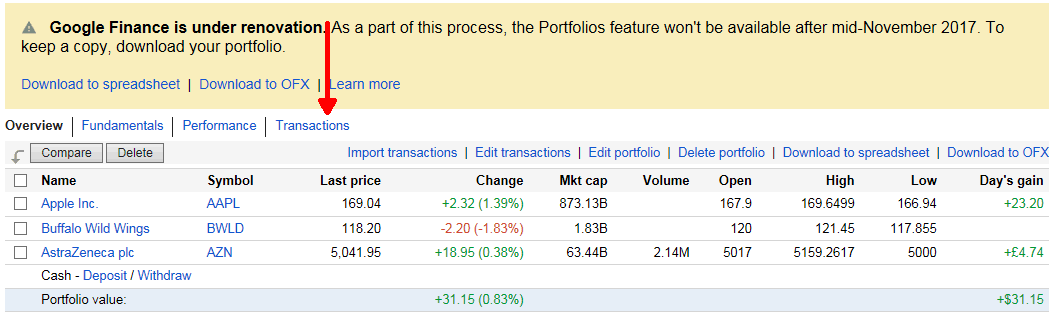
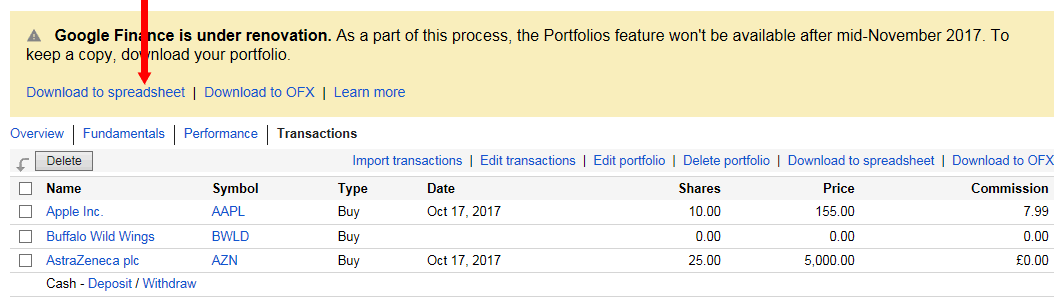
Log in to your Google Finance portfolio and locate the Transactions link. From there, use the download or export option to save your transaction history as a spreadsheet file to your computer.
On the Google Finance transactions page, click the Download to Spreadsheet link and save the downloaded file to your hard drive.
Step 2: Log in to your EquityStat account
If you don’t already have an EquityStat account, you can create one for free before continuing.
Step 3: Start the import
In EquityStat, click the New menu at the top of the screen and choose Import Transactions from the dropdown.
Step 4: Upload your file
On the import page, click Browse to locate the spreadsheet file you saved in Step 1, then click Import to load it.
Step 5: Review and confirm
EquityStat will show you a summary of the transactions it’s about to import. Review the summary, correct any errors it flags, and once everything looks right, click Import Data to finish bringing your Google Finance transaction history into EquityStat.
What You Get Once Your Data Is Imported
Once your transaction history is in EquityStat, you are not just looking at a static copy of your old Google Finance portfolio. You get a working stock portfolio tracker – real-time price updates, performance metrics like annualized return and year-to-date return, dividend tracking, and benchmark comparisons against the S&P 500, Dow Jones, and Nasdaq, all of which Google Finance’s portfolio tool never offered.